
No Wrong Path #2
In this edition, we speak with a leading figure in the women’s game, Nicole Allison, CEO and Founder of Worcester City Women FC.
On Horizon Scanning, Bravery, and Building Worcester City Women
As women’s football continues to expand both globally and locally, Nicole Allison is a driving force helping to shape the game’s future.
She didn’t simply enter the game; she created her own pathway within it. From growing up with limited opportunities to play, to leading Tottenham Hotspur Women, and now owning Worcester City Women FC, her journey reflects the realities of working in a developing industry where leadership often means building from the ground up.
Today, Nicole is building an independent club with a clear vision: to create opportunity, strengthen communities, and establish Worcester’s first fully professional women’s football club. Alongside her work as a football business professional, entrepreneur, and educator, she champions sustainability, leadership, and long-term growth across the game.
In this Q&A, she reflects on her journey into women’s football, the importance of “horizon scanning,” and how bravery, purpose, and long-term thinking are driving the sport forward.
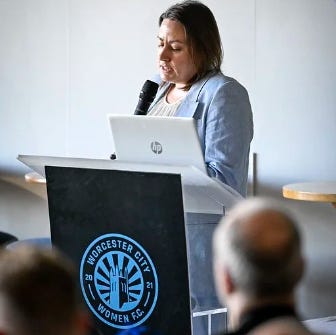
Tell us a bit about yourself. What first sparked your ambition to work in the women’s game? What appealed to you about this space in particular?
My ambition to work in women’s football is very personal and shaped by my own experience growing up with limited opportunities in the game. When I was young, pathways for girls were restricted.
I grew up in a football-loving family and was the only girl in my primary school team, but by the time I reached secondary school there were no opportunities for girls’ football at all.
When you got to high school, there was just no girls football whatsoever. So I had to just stop.
I returned to football at 15–16 through a newly formed Worcestershire county team created by Dawn Scott, who was lecturing at the university and completing her coaching badges at the time. That reignited my involvement and eventually led me to Wolverhampton Wanderers Women.
A key turning point for me came during a year abroad in Germany while I was studying European Studies. I saw a much stronger women’s football culture and media presence there than in England, and that really opened my eyes to what the game could become here. It sparked my interest not just in playing, but in the business and structure behind football.
That really started to pique my interest in learning about the business side of football.
What appealed to me most about the women’s game was its potential for growth and impact, creating pathways, breaking barriers, and building opportunities that I didn’t have growing up. That motivation continues to shape my work today at Worcester City Women, where we aim to provide opportunities and prove that there’s a pathway for girls and women in the county.
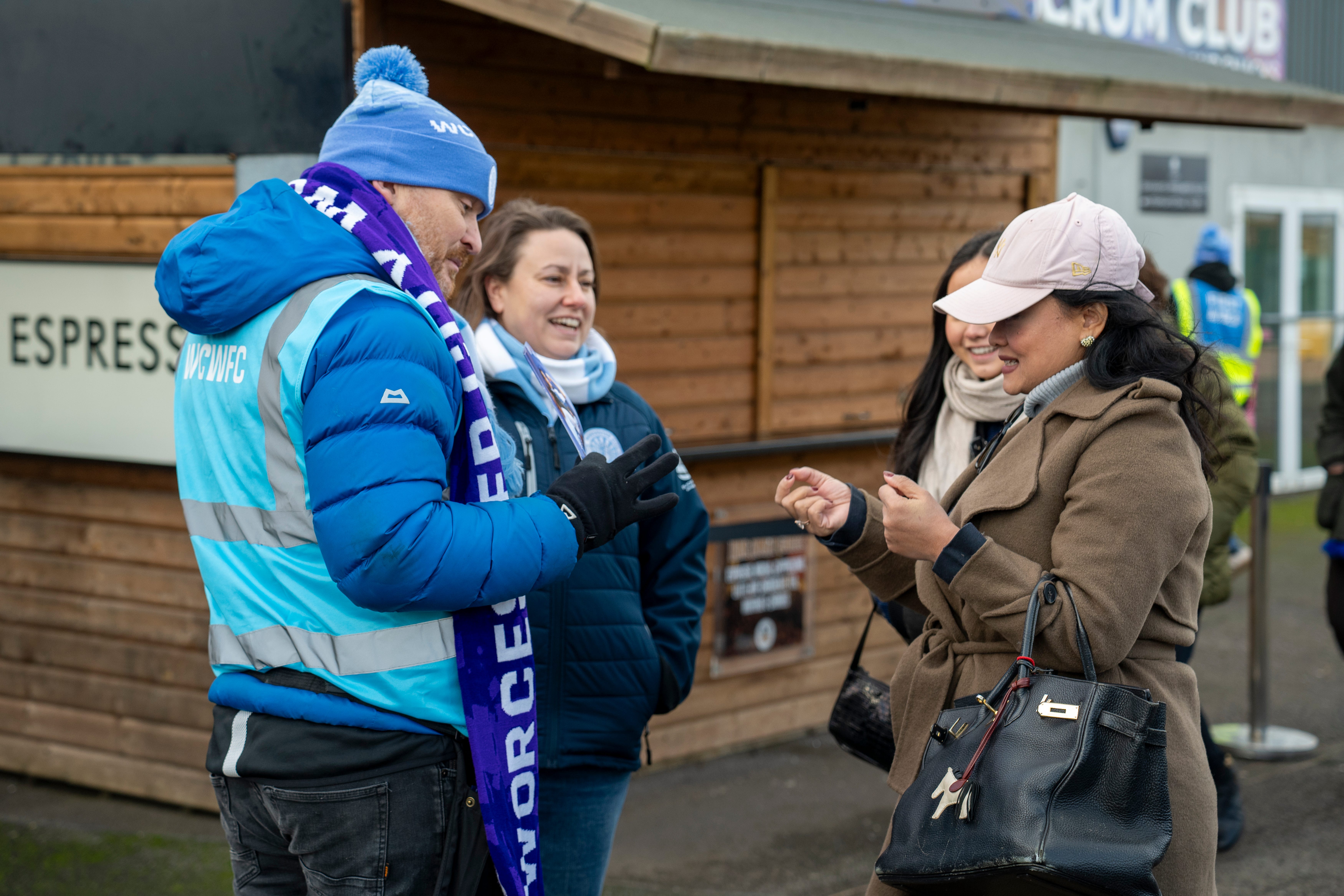
Your career has moved across playing, research and study, valuable work experience in the women’s game, consulting, and club ownership. How did that journey unfold — and were opportunities planned or shaped by timing, relationships, or circumstance?
My career has largely been shaped by relationships, networks, and proactive action rather than traditional job applications.
My job roles that I’ve had have never been me applying for a job and getting that job. It’s been connections and networks that I have built and maintained over years.
Earlier in my career, I contacted sports companies. I secured a 6-month contract at Kantar Sport, which became a full-time role. I completed my Master’s in Football Business part-time over two years while at Kantar. After 3.5 years, I was then recruited by the English Football League and later returned to sports research and consulting.
My move into club leadership followed a similar pattern. As a Tottenham fan, I reached out to contacts to ask who managed the women’s team off the pitch, and that led to me being offered the General Manager role at Tottenham Hotspur Women, where I helped professionalise the club, and support its promotion to the WSL.
Alongside running Worcester City Women, I also teach, which is one of my main consultancy areas. I teach sports business, women’s football, and leadership, and I always tell students the same thing: you can’t wait for doors to open, especially in football. You must be brave and open them yourself.
A defining moment came during COVID-19. I used that time to reflect and analyse the industry.
COVID was that moment for owning my own football club. I never, ever considered it before.
That ultimately set my path to acquire and develop Worcester City Women in 2021. When I look back, my journey has really been shaped by timing, observation, relationships, and taking initiative, what I describe as “horizon scanning”.
You mention “horizon scanning.” What does that mean in practice, and how has it shaped your decisions?
For me, horizon scanning is about constantly looking ahead and observing what’s happening in the industry, understanding trends, and thinking about what’s coming next rather than just reacting to the present. I’m always asking: what does the game need? Where are the gaps? Where can I make an impact?
COVID was the biggest example of this. I saw how vulnerable women’s football could be, particularly when teams were dependent on men’s clubs. Resources were being redirected and women’s teams were often at risk, which made me realise that dependency is dangerous.
That led me to rethink the model. The industry needed more independent women’s clubs and more women leading them, building something sustainable and in control of its own future. That’s what led me to Worcester City Women.
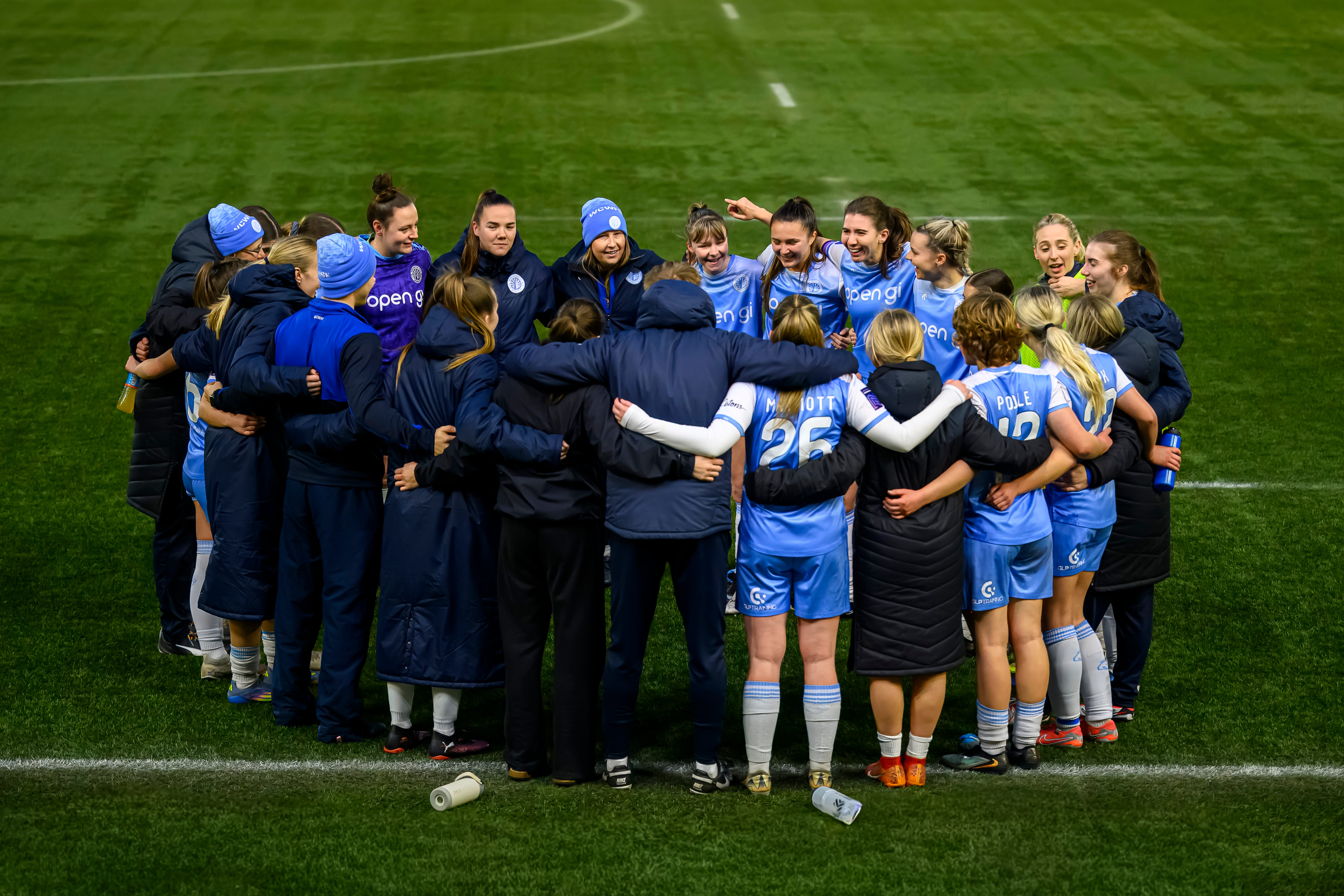
What does a typical week look like for you as the owner and CEO of Worcester City Women, and how do you balance immediate demands with long-term sustainability and success?
My week is very varied because I balance multiple responsibilities. I own Worcester City Women, and alongside that I work in teaching, consultancy, and business development. I teach leadership and sports business, run consultancy projects, and co-founded a business called SheHub to help clubs use data and improve their commercial operations.
Nothing really prepares you for owning a football club.
We started from the ground up: buying balls, cones, kits, booking training, building a culture, recruiting staff. More than running a team, it’s building an organisation and a community.
What surprised me most was the scale of responsibility and how many different roles you take on: strategic, operational, financial, cultural. That experience reinforced that sustainability has to sit at the centre of everything we do.
We’re very much about sustainability. It’s one step at a time.
I focus on financial stability, gradual growth, and investing in the right areas rather than expanding too quickly. We’re careful not to move faster than we can support.
I also measure success far beyond results on the pitch.
Winning isn’t everything. If you define success purely on winning, then you’re going to be disappointed more often than not.
For me, success is about creating opportunities for women and girls, developing pathways for local talent, building community engagement, and contributing to the long-term growth of women’s football. Our purpose is about breaking down barriers and building something meaningful, not just chasing short-term results.
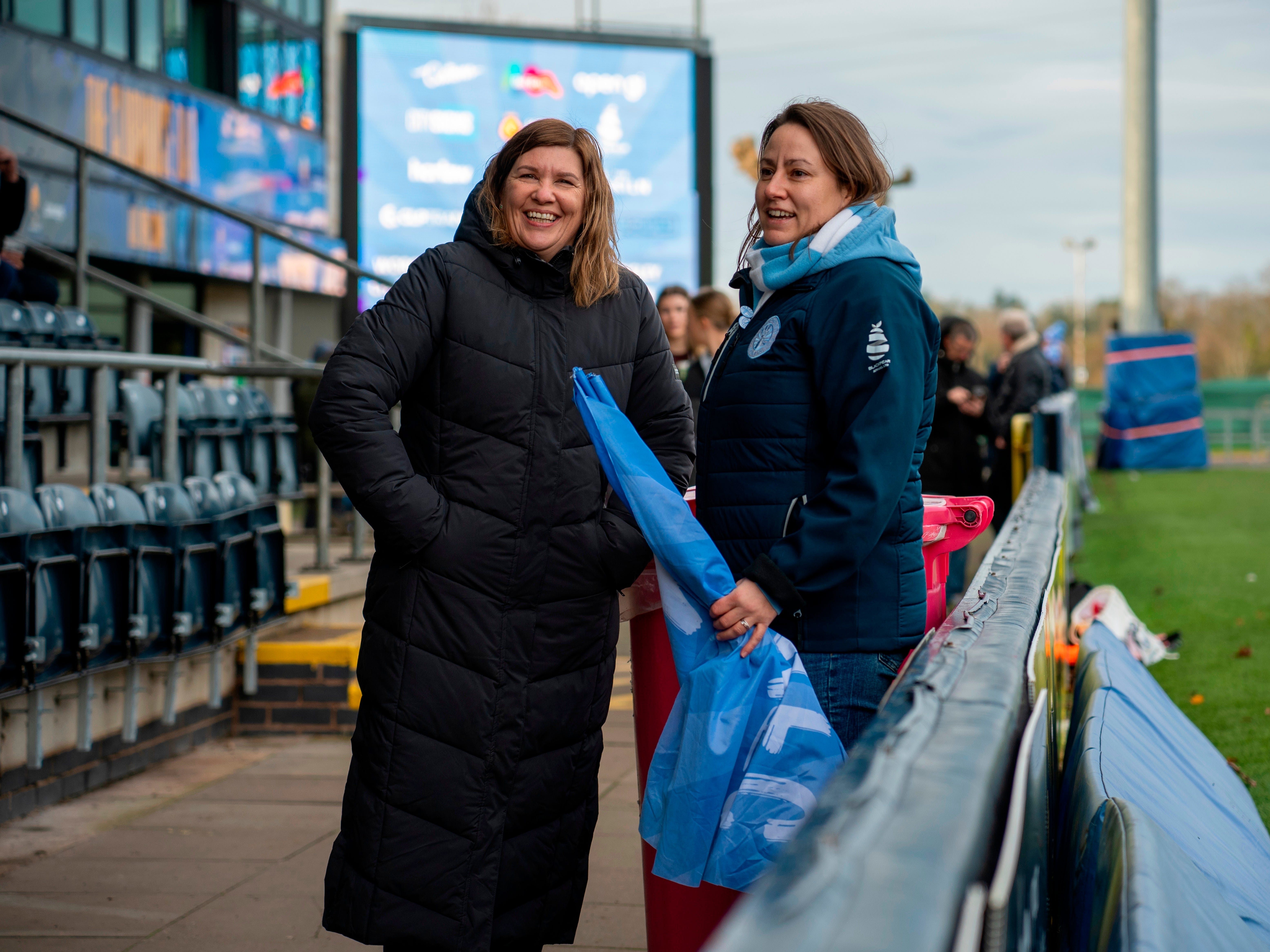
From where you sit, how visible and accessible do you think roles in the women’s game are today, and what do you hope will improve as the game grows?
I think opportunities in the women’s game have increased significantly in recent years, particularly in terms of professional standards and organisational structures.
Clubs now face higher expectations across areas like performance, safeguarding, marketing, and medical provision, which requires more professional expertise and operational capability.
You’ve got to run it like it’s a business.
However, there are still challenges. Many clubs operate without broadcast revenue or central funding, which creates financial pressure even as professional expectations continue to rise. That’s why I believe it’s important for women’s clubs to be able to control their own future rather than rely on men’s teams.
Looking ahead, I hope the industry continues to increase professional opportunities, improve financial sustainability, support independent women’s clubs, expand leadership opportunities for women, and strengthen the overall ecosystem.
For me, it’s not just about individual clubs succeeding, it’s also about raising standards across the whole industry and helping each other.
Congratulations, Worcester City Women FC is turning 5! What’s been your biggest achievement in the first five years, and what’s your main goal for the next five or more?
The goal for the next five years is very clear: we want to become the first fully professional football club in Worcester. The city has never had a professional football club, and for a place of around 100,000 people, that’s something we really want to change. Everything we’re building now is working towards that long-term vision.
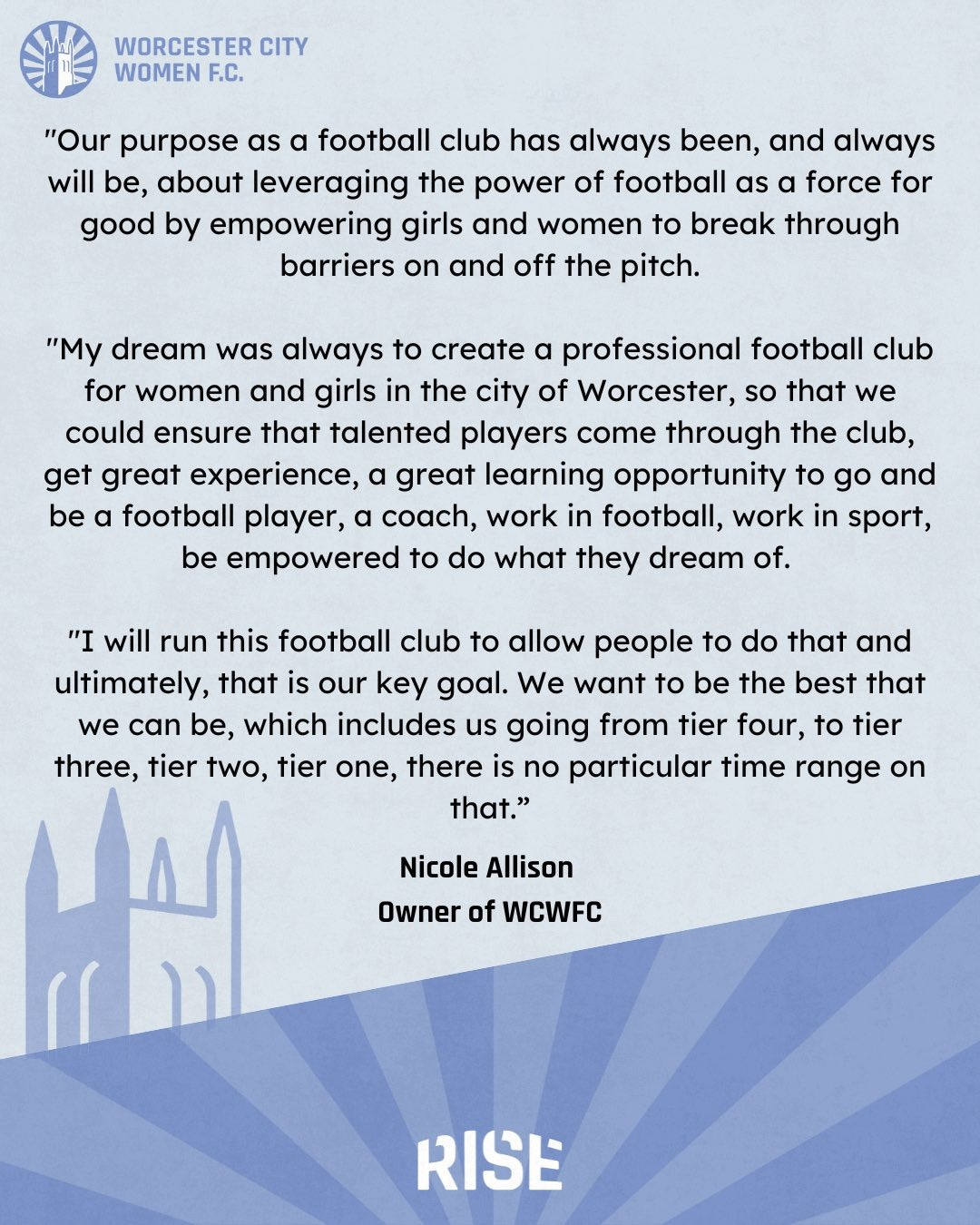
But when I think about the last five years, it would be easy to point to results on the pitch, like our promotion to the National League.
But what I’m most proud of is our community impact.
Alongside creating a women’s football team, we’ve built a club that provides opportunities and a pathway for girls and women in this part of the country, while also creating something meaningful for the wider community. Alongside the club, we’ve established a community interest company that delivers inclusive football programmes open to everyone.
Through those programmes, people are meeting new friends, getting fitter, feeling healthier, and building genuine connections. We run a mixed-gender football session every Friday night and seeing people from all walks of life come together, find a sense of belonging, and become part of the club is incredibly powerful. That sense of connection, you can’t put a price on it.
What’s been most rewarding is seeing how that impact spreads. People join a session, then they start following the team, then they become part of the journey. The club becomes something that matters in their lives.
Looking ahead, the ambition is to grow that impact even further, to build a sustainable, fully professional club that continues to serve the community and create opportunities for the next generation.
There’s no single route into the women’s game. Every journey is different; and every path is yours to create.
If Nicole’s story resonated with you, tap the like button and share it with someone finding their own way. And if you’re open to it, we’d love to hear what has shaped yours.
Get in touch with Francesca Russell, our Head of Talent & Partnerships, at francesca@formationgoals.com.